
Our resume is the architecture
Environmental responsibility is not an ESG overlay on a NexEdge platform. It is how the team builds, because it is how the team has always built.

Our resume is the architecture
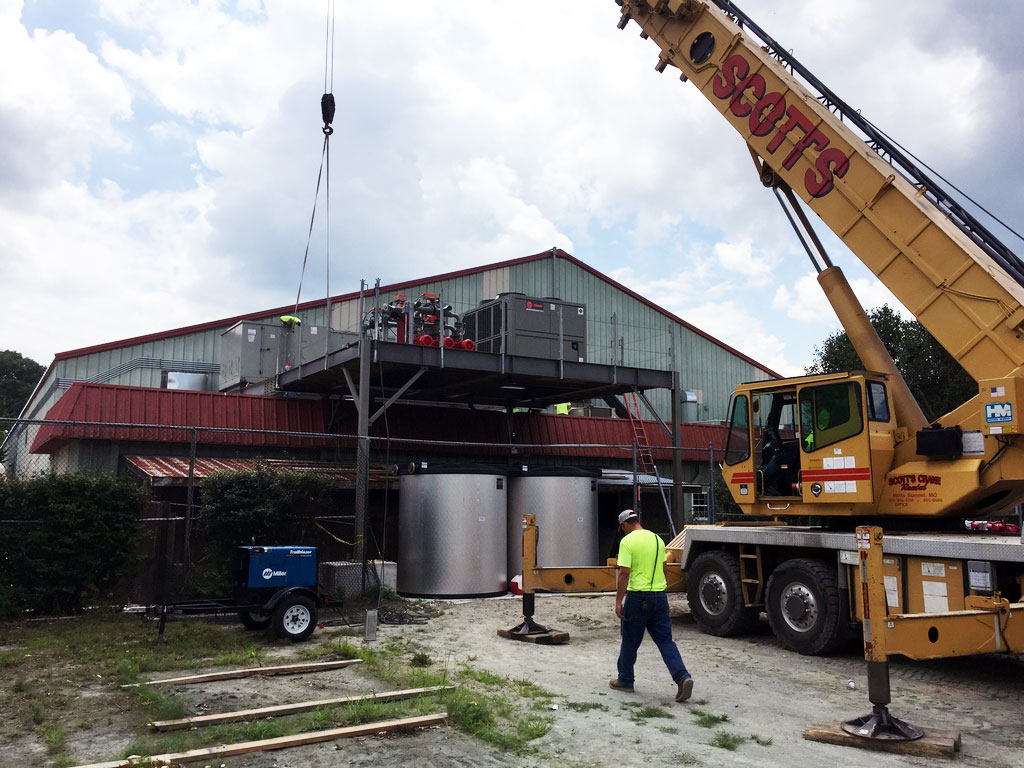
The through-line is simple: we know how to take a building’s total energy load down. That knowledge applies directly to data-center load management, cooling strategy, and partial-load efficiency, which is where most Tier 3 designs quietly bleed.

Renewable generation and firming
For NexEdge that means a regional platform can integrate on-site solar where the site supports it, battery storage for peak shaving and demand response, CHP where waste heat has a local use, and fuel cells as primary or firming power. Every regional platform is engineered with these options on the table, not as an afterthought.
Fuel cells as a guiding principle
A NexEdge regional platform’s Phase 2 firming and primary-power strategy is fuel-cell-led, with Fuel Cell Energy and Bloom Energy as the preferred partners. Fuel cells give us:
- Fast delivery. Bloom can ship PO-to-power in approximately 90 days. That compares favorably to multi-year queues for new generator interconnection.
- Clean primary power. Approximately 9 cents per kWh, same or lower than reciprocating engines or gas turbines.
- Scale. Bloom has over 1.5 GW deployed globally, over 400 MW deployed at data centers, and over 100 MW with Equinix alone.
- A path to hydrogen. Hydrogen-blending is a credible post-2030 decarbonization path on the same hardware.
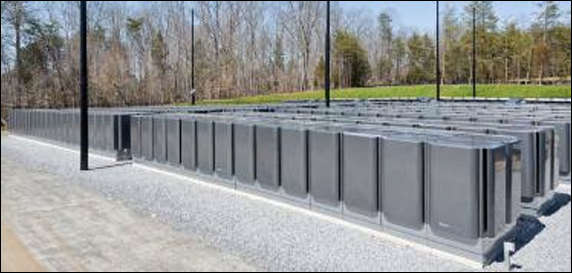
At NexEdge, fuel cells are not about appeasing public sentiment. They are a faster, cleaner, cheaper primary-power option than the alternatives, and they are part of our team’s resume.
What this means for a tenant
If you are an IG-rated offtaker signing a long-dated lease with NexEdge, the environmental architecture of the platform becomes part of your own sustainability narrative. You get documented closed-loop cooling, fuel-cell primary-power optionality, a defined carbon-reporting framework per region, and a development team whose day job for two decades has been making buildings use less energy. You do not have to fight us for any of that. It is already how we build.